
Samsung Galaxy S26 Launch: The 2nm Revolution and a Strategic Comparison with iPhone 17
Discover why the Samsung Galaxy S26, featuring the world’s first 2nm processor in the standard lineup, is more than a smartphone—it’s a productivity infrastructure. A hands-on perspective comparing it with the iPhone 17 Pro Max in efficiency, hardware design, and agentic AI, ahead of its February 25, 2026, Unpacked debut.
I’ve been rocking a Galaxy S23 Ultra for almost three years now, and it’s been one of the most satisfying devices I’ve ever owned. The S Pen, that 200MP camera, the battery life that actually gets me through a full workday of shooting, editing, and uploading content—it just works.
Honestly, I was seriously considering making the jump to iPhone this year. The iPhone 17 Pro Max’s new aluminum unibody design caught my eye, and Apple Intelligence has been getting better with every update. I even walked into an Apple Store twice to check one out.
But then the Galaxy S26 Ultra leaks started rolling in. The agentic AI features, the Privacy Display, the 60W charging that Samsung finally decided to deliver—it all added up. After weeks of research and comparing spec sheets, I’ve made my decision: I’m upgrading to the Galaxy S26 Ultra on launch day, March 11.
This article is the result of that research. Every spec has been fact-checked, every claim verified against credible sources. If you’re on the fence like I was, this breakdown will help you decide.
The upcoming Galaxy Unpacked 2026 event, officially confirmed for February 25 in San Francisco, marks a pivotal moment in mobile computing. As Samsung prepares to unveil the Galaxy S26 series, the discourse has shifted from incremental upgrades to a meaningful leap in hardware architecture and AI capabilities. In an era where mobile devices serve as the primary hub for both professional output and personal management, the Galaxy S26 is being positioned not merely as a consumer product, but as a critical piece of personal infrastructure.
With a confirmed retail release date of March 11, the S26 enters a market where the iPhone 17 Pro Max has been the device to beat since September 2025. However, the technical specifications revealed by WinFuture’s spec leak (via PhoneArena) indicate that Samsung is prepared to make a serious case for performance leadership through aggressive semiconductor innovation and a new “Agentic AI” ecosystem.
Strategic Rationale: Why the 2nm Conversation Matters
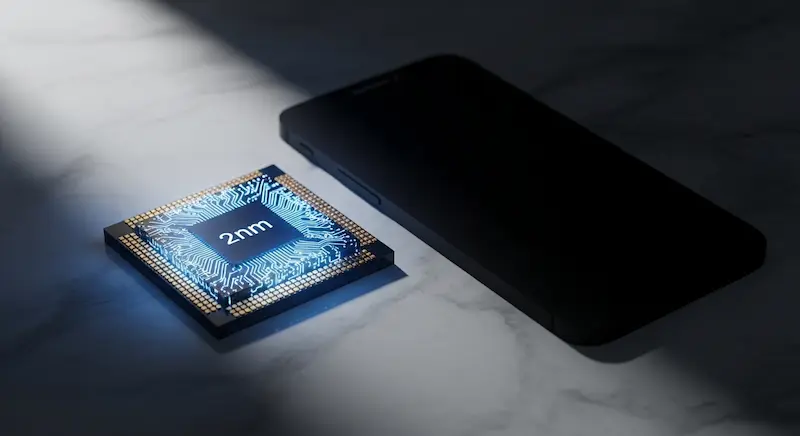
The most significant strategic shift in the 2026 flagship market is Samsung’s deployment of the 2nm (nanometer) fabrication process through its Exynos 2600 chipset. This is a real milestone: the Exynos 2600 is the world’s first mobile processor built on a 2nm node, utilizing ARM’s v9.3 architecture with a 10-core design.
However, here’s a critical nuance that many articles get wrong: the Galaxy S26 Ultra does not use a 2nm chip at launch. The Ultra model is powered by the Snapdragon 8 Elite Gen 5, which is manufactured on TSMC’s 3nm (N3P) process. The 2nm Exynos 2600 is used in the Galaxy S26 and S26+ models (in select regions including Europe). Qualcomm and Samsung Foundry are in discussions to produce a 2nm variant of the Snapdragon 8 Elite Gen 5, but that chip is not shipping with the S26 Ultra at launch.
That said, the broader 2nm story is still immensely relevant. For the Galaxy S26 and S26+, the Exynos 2600 delivers a reported 40% performance improvement over its predecessor, along with Samsung’s new Heat Path Block (HPB) packaging technology that reduces thermal resistance by up to 16%.
For professionals, this translates to:
Thermal Stability: Extended high-performance tasks—4K video editing, large-scale data processing—without the aggressive throttling seen in prior generations. Samsung’s HPB technology is specifically designed to maintain peak performance under sustained loads.
Battery Longevity: The 2nm process offers meaningful efficiency gains, meaning better battery life in a thinner chassis. The S26 Ultra drops from 8.2mm to 7.9mm thickness while maintaining its 5,000mAh battery.
Long-Term Value: A device capable of running increasingly demanding local AI workloads for years to come, as on-device Large Language Models (LLMs) become a standard feature of mobile computing.
Detailed Classification: The Galaxy S26 Tiered Analysis
Samsung continues its three-tier strategy, but with wider hardware divergence than previous generations. Here’s what each tier brings to the table, based on GSMArena’s comprehensive spec leak:
The Entry-Level Powerhouse: Galaxy S26 (Standard)
The base model is designed for users prioritizing portability without sacrificing the core next-gen benefits. It measures 7.2mm thick at just 167g, with a 6.3-inch Dynamic AMOLED 2X display. Notably, this is the model that carries the historic 2nm Exynos 2600 processor, making it the first smartphone in history to ship with a 2nm chipset. It comes with 12GB of RAM and starts at 256GB storage, paired with a 4,300mAh battery and 25W wired charging.
The Balanced Professional: Galaxy S26+
The S26+ serves the “pro-sumer” who requires more screen real estate (6.7 inches) and thermal headroom for multitasking. It shares the Exynos 2600 processor and 12GB of RAM with the standard model but bumps the battery to 4,900mAh and charging to 45W. The larger body provides better sustained performance for demanding workloads.
The Infrastructure King: Galaxy S26 Ultra
The Ultra remains the flagship for power users. It features the exclusive Snapdragon 8 Elite Gen 5 “for Galaxy” with slightly overclocked Prime CPU cores. RAM is 12GB for the 256GB and 512GB storage options, with 16GB reserved for the 1TB model. It also integrates the Flex Magic Pixel Privacy Display, which narrows viewing angles to prevent “shoulder surfing” in public spaces—a feature Samsung has been actively teasing ahead of launch and one that could be genuinely valuable for professionals handling sensitive information.
Comparative Analysis: Samsung Galaxy S26 Ultra vs. iPhone 17 Pro Max
To understand the market value, we need to compare these devices across the primary pillars of hardware and software. The iPhone 17 Pro Max shipped in September 2025, so we have real-world performance data to compare against Samsung’s leaked specifications.
Table 1: Hardware Specs & Tier Comparison
| Feature | Galaxy S26 Ultra | iPhone 17 Pro Max | Strategic Advantage |
|---|---|---|---|
| Processor | Snapdragon 8 Elite Gen 5 (TSMC 3nm N3P) | A19 Pro (TSMC 3nm N3P) | Tie (both 3nm; iPhone leads sustained perf. via vapor chamber) |
| RAM | 12GB LPDDR5X (16GB on 1TB model) | 12GB LPDDR5X | Samsung (1TB model advantage) |
| Display | 6.9″ Dynamic AMOLED 2X, Gorilla Armor 2, Privacy Display | 6.9″ LTPO Super Retina XDR, Ceramic Shield 2 | Samsung (Privacy Display is unique) |
| Wired Charging | 60W | 40W | Samsung |
| Wireless Charging | 25W | 25W MagSafe | Tie |
| Build Material | Titanium frame / Gorilla Armor 2 | Aluminum unibody / Ceramic Shield front & back | Tie (different strengths: titanium for hardness, aluminum for thermal conductivity) |
| Thickness | 7.9mm / 214g | 8.3mm / 227g | Samsung (thinner and lighter) |
| Battery | 5,000mAh | 4,823mAh (5,088mAh eSIM-only) | Samsung (larger capacity) |
Sources: GSMArena (S26 Ultra) | Apple Support (iPhone 17 Pro Max) | Wikipedia (A19 Pro)
Table 2: Camera & AI Ecosystem Comparison
| Feature | Galaxy S26 Ultra | iPhone 17 Pro Max | Best For |
|---|---|---|---|
| AI Philosophy | Agentic AI: Multi-app task execution via enhanced Bixby/Gemini/Perplexity integration | Apple Intelligence: On-device processing with Private Cloud Compute | Samsung for productivity / Apple for privacy |
| Main Camera | 200MP wide (f/1.7) | 48MP Fusion (f/1.78) | Samsung for raw resolution |
| Telephoto | 50MP 5x periscope + 10MP 3x | 48MP tetraprism (4x/8x optical-quality zoom) | Apple for zoom versatility |
| Ultra-Wide | 50MP (f/2.2) | 48MP (f/2.2) | Tie |
| Front Camera | 12MP | 18MP Center Stage | Apple |
| Video | 8K @ 30fps, 4K @ 60fps | 4K ProRes, Dolby Vision HDR | Samsung for resolution / Apple for pro workflows |
| OS | Android 16 / One UI 8.5 | iOS 26 | Preference-dependent |
Sources: Android Headlines (S26 Ultra cameras) | Apple.com (iPhone 17 Pro) | Wikipedia (iPhone 17 Pro)
Correction Note: Some early reports incorrectly stated the iPhone 17 Pro Max has a titanium frame and 15W wireless charging. Apple actually switched to an aluminum unibody design for the iPhone 17 Pro series with a vapor chamber cooling system, and wireless charging now supports up to 25W via MagSafe. We’ve verified all specs against official Apple documentation.
The Rise of Agentic AI: Software as a Service Layer
While the hardware competition is close, the software story is where things get genuinely interesting. Samsung is making a deliberate strategic pivot from “Generative AI” (which creates content on command) toward “Agentic AI”—systems that can independently execute multi-step tasks across different apps.
This isn’t just marketing language. In its most recent earnings release, Samsung explicitly stated its plans to “expand sales centred on flagship products with the launch of Galaxy S26, and strengthen leadership in the AI smartphone market through an agentic AI experience.” This marked the company’s first official use of the term “agentic AI” in a corporate filing.
What does this look like in practice? Based on SamMobile’s analysis of One UI 8.5 code strings, Samsung is deploying multiple AI agents within the system:
Multi-Agent Architecture: Rather than relying solely on Gemini, Samsung is integrating multiple AI providers. Reports from Tom’s Guide suggest that Samsung is close to finalizing a deal with Perplexity to preinstall their AI search as a default option within Samsung’s browser and Bixby.
Practical Features: One UI 8.5 brings at least four new AI features at launch: Meeting Assist (real-time translation of conversations and presentations), Touch Assist (on-screen text processing for improved reading), Smart Clipboard (AI-powered actions like Summarize, Translate, and Search when you copy text), and AI Notification Summaries powered by Samsung’s in-house Gauss model.
Enhanced Bixby: Samsung’s voice assistant has received a meaningful upgrade ahead of the S26 launch. In the One UI 8.5 beta, Bixby now understands natural language requests, can adjust device settings proactively, and returns web answers without opening a browser—positioning it as a device-native agent rather than a generic chatbot.
The broader industry context supports this direction. Analysts believe agentic AI—where your phone proactively manages tasks like scheduling, booking, and cross-app workflows with minimal input—represents the next major evolution in how we interact with mobile devices. Samsung is betting that being first to market with this capability will justify the premium price point.
Internal Links (MoneyMakesHoney Strategy)
Related Reading:Learn how to maximize your device’s ROI →Top tech stocks to watch in 2026 →How to secure your digital assets →
FAQ: People Also Ask
1. Is the Galaxy S26 worth the upgrade from the S23 or S24?
If you’re coming from the S23 series (like I am), the upgrade is substantial. You’re jumping from a 4nm Snapdragon 8 Gen 2 to a 3nm Snapdragon 8 Elite Gen 5 in the Ultra—that’s two full process-node generations of improvement. Add the agentic AI capabilities, Privacy Display, and 60W charging, and it’s one of the most meaningful Galaxy upgrade cycles in years. If you’re on the S24, the jump is still worthwhile but less dramatic, primarily driven by the software and AI improvements.
2. When is the official Samsung Galaxy S26 release date?
The unveiling is February 25, 2026, at Galaxy Unpacked in San Francisco. The global retail launch is expected on March 11, 2026. Pre-orders will likely open immediately after the Unpacked event. Source: Sammy Fans
3. Will the Galaxy S26 be more expensive?
European pricing leaked by WinFuture (via GSMArena) shows the S26 starting at €999 in Europe. U.S. pricing hasn’t been officially confirmed, but expect a modest increase of $50–$100 across the lineup due to higher wafer costs for 2nm production and rising memory prices. Samsung typically offers generous trade-in deals and free storage upgrades during the pre-order window to soften the blow.
4. How does the S26 Ultra camera compare to the iPhone 17 Pro Max?
Samsung retains the raw resolution crown with its 200MP main sensor and dual telephoto system (50MP 5x + 10MP 3x). However, the iPhone 17 Pro Max made a significant leap with its all-48MP camera system, featuring a new tetraprism telephoto with 4x/8x optical-quality zoom—the longest zoom ever on an iPhone. For video, Apple maintains a strong edge with ProRes recording and Dolby Vision HDR. For photography versatility and zoom range, Samsung leads. For video consistency and professional editing workflows, Apple has the advantage.
5. Does the Galaxy S26 Ultra support 60W charging?
Yes. The S26 Ultra bumps wired charging from 50W (on the S25 Ultra) to 60W, along with 25W wireless charging. This is a meaningful upgrade that, combined with the 5,000mAh battery, should deliver significantly faster “zero to full” times. For comparison, the iPhone 17 Pro Max tops out at 40W wired and 25W MagSafe wireless.
6. Does the Galaxy S26 Ultra use a 2nm processor?
No—this is a common misconception. The S26 Ultra uses the Snapdragon 8 Elite Gen 5, which is manufactured on TSMC’s 3nm (N3P) process. The 2nm chip is Samsung’s Exynos 2600, which powers the standard S26 and S26+ models in select regions. Samsung and Qualcomm are working on a 2nm variant of the Snapdragon, but it’s not available at launch.
Pre-Purchase Verification Checklist
Before purchasing or pre-ordering the Galaxy S26, verify the following:
- ☐ Regional Processor: Confirm if your region receives the Snapdragon 8 Elite Gen 5 (most markets) or the Exynos 2600 (select European markets for S26/S26+). The Ultra uses Snapdragon globally.
- ☐ Trade-In Valuation: Check the ROI on your current device. Samsung typically offers peak trade-in value during the first 14 days of pre-order, plus free storage upgrades have been confirmed for launch.
- ☐ Storage Needs: With AI models running locally, 256GB is now the minimum. The 512GB model is recommended for professional use, especially if you shoot 8K video or use on-device AI features heavily. Only the 1TB Ultra model gets 16GB of RAM.
- ☐ Carrier Compatibility: Ensure your 5G bands are supported for maximum data throughput. The S26 series supports Wi-Fi 7 across all models.
Editor’s View: Tactical & Long-Term Perspective
From a practical standpoint, the Galaxy S26 Ultra represents a compelling upgrade for anyone whose daily productivity depends on their smartphone. The combination of the Snapdragon 8 Elite Gen 5’s raw horsepower, the Privacy Display for working in public, and Samsung’s aggressive push into agentic AI creates a device that’s designed to do more for you, not just with you.
However, let’s be honest about what Apple does well. The iPhone 17 Pro Max’s vapor chamber cooling system delivers up to 40% better sustained performance than the previous generation, and Apple Intelligence’s privacy-first approach resonates with users who are wary of AI processing their personal data. If you’re deeply invested in the Apple ecosystem—AirPods, MacBook, Apple Watch—switching to Samsung involves real friction.
For me, the decision came down to this: I create content for a living. The S26 Ultra’s 200MP camera system, S Pen for quick notes, and the promise of AI that can actually manage my calendar and booking workflows across multiple apps—that’s worth more to me than ecosystem convenience. If you’re a Galaxy S23 or S24 owner who’s been waiting for a reason to upgrade, February 25 is your date. If you’re happy with your iPhone and Apple’s ecosystem, the iPhone 17 Pro Max remains an excellent choice—just don’t let anyone tell you it’s the only excellent choice.
Last updated: February 21, 2026. All specifications are based on official Samsung teasers, credible supply chain leaks, and verified Apple documentation. Final specs will be confirmed at Galaxy Unpacked on February 25, 2026.
Key Sources:
- GSMArena – Full Galaxy S26 specs leak
- PhoneArena – Galaxy S26 family confirmed specs (via WinFuture)
- Apple Support – iPhone 17 Pro Max Official Specs
- Wikipedia – Apple A19 / A19 Pro
- Qualcomm – Snapdragon 8 Elite Gen 5 Official Announcement
- Tom’s Guide – Galaxy S26 AI Features
- SamMobile – Galaxy S26 Agentic AI